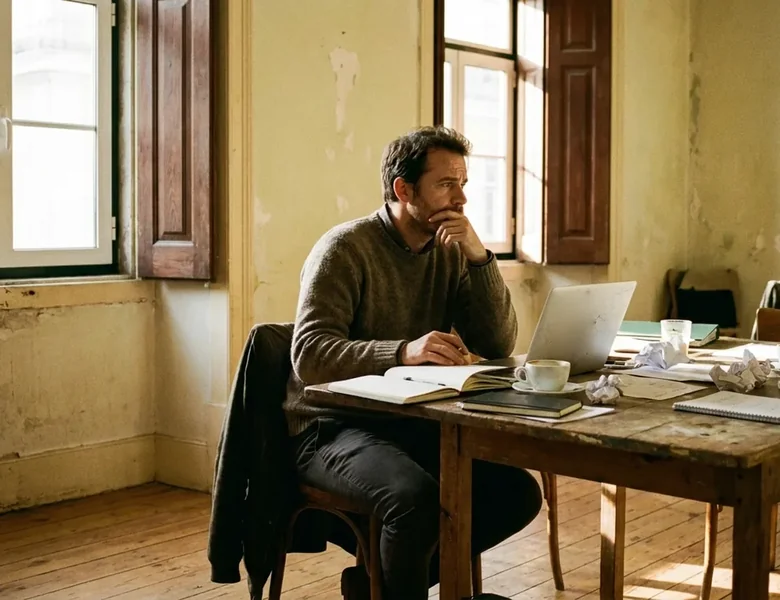
Menos dependência de horas opacas
A Outlex não elimina advogados; prepara melhor o momento em que eles entram.
A Outlex existe para dar às startups europeias uma terceira via: menos incerteza horária, menos IA genérica, responsabilidade quando necessária e mais contexto jurídico operacional.
A Outlex não elimina advogados; prepara melhor o momento em que eles entram.
A IA jurídica precisa de jurisdição, materiais e escalamento, não de teatro.
O fundador vê risco, consequência e próxima ação no mesmo lugar.
Há uma força invisível a puxar as empresas para baixo. Não notas até estares a afogar. Os desafios jurídicos não se anunciam. Acumulam-se silenciosamente.
Um contrato que meio percebeste mas assinaste na mesma—porque o negócio não podia esperar. Uma checkbox de compliance que adivinhaste—porque a resposta real custava €250/hora. Uma cláusula que não questionaste—porque questionar significava admitir que não sabias. Uma semana perdida em "revisão jurídica"—enquanto a concorrência avançava.
Tudo isto resulta num custo afundado. Nada disto alimenta crescimento, produto ou clientes. Apenas pagar um imposto alto para ficar seguro. Ou uma aposta cega para andar depressa.
Quando nos deram duas escolhas...decidimos construir uma terceira.
A maior parte do que pagas não é julgamento jurídico ou aconselhamento estratégico. É análise jurídica padronizada e processamento de informação. Administração.
Ler um contrato e extrair termos-chave? → Reconhecimento de padrões.
Verificar se a tua política de privacidade cobre o RGPD? → Uma lista de verificação.
Redigir um NDA para um novo fornecedor? → Trabalho de modelo.
Responder "posso fazer isto na Alemanha?" pela centésima vez? → Pesquisa básica.
A indústria jurídica monetizou a lacuna entre o que os fundadores precisam de saber e o que podem facilmente aceder.
Mas a questão é esta—os melhores advogados não alargam essa lacuna. Fecham-na. Capacitam-te, dão-te autonomia, constroem sistemas para que nunca pagues duas vezes pela mesma resposta.
Nem todas as perguntas precisam de ser uma taxa de consulta. Nem todos os modelos precisam de ser encomendados. O que te confunde uma vez deve tornar-se vantagem para sempre.
A complexidade não é natural. Foi engenheirada. Isso não é uma corrente. É uma âncora. Não é culpa de ninguém—os grandes advogados nadam contigo contra a corrente. Mas a âncora continua lá.
Não se arranjam vinte e sete rios com um barco americano.
Agora acrescenta geografia. Múltiplas geografias.
Um fundador em São Francisco tem um rio para atravessar. Um sistema jurídico. Uma língua. Um conjunto de modelos que realmente funciona.
Um fundador em Lisboa a vender para a Alemanha, a contratar em Espanha, a levantar capital em Londres? Vinte e sete rios. Vinte e sete sistemas jurídicos. Vinte e sete conjuntos de leis laborais, normas contratuais, regras de compliance e exceções locais. Cada um com a sua própria corrente, a sua própria profundidade, a sua própria forma de te puxar para baixo.
O fundador americano pergunta: "Este contrato é executável?"
O fundador europeu pergunta: "Em que país?"
Isto não é uma característica de construir na Europa. É um imposto sobre a ambição. Uma portagem por cada fronteira que ousas atravessar.
E as ferramentas construídas em Silicon Valley? Não sentem esta dor. Não nadam nestas águas. Tratam a Europa como um problema de localização — uma UI traduzida, uma checkbox de RGPD, uma nota "em breve na UE".
Não se arranjam vinte e sete rios com um barco americano.
A Europa não precisa de ferramentas americanas com pintura europeia. A Europa precisa de infraestrutura. Infraestrutura real. Construída por pessoas que nadam nestas águas todos os dias. Que conhecem as correntes. Que sentiram as âncoras.
A mesma complexidade que afoga fundadores hoje? É o fosso que protege quem resolver isto primeiro. Não uma ponte. Não uma solução pontual (ou uma pilha de 5).
A Europa precisa de um Sistema Operativo Jurídico.
Águas calmas não é a ausência de complexidade. É o GPS.
Agora imagina algo diferente. O mesmo negócio. O mesmo contrato alemão. Mas desta vez, não estão a afogar-se.
Carregas o documento. Segundos depois: cada alteração assinalada, cada risco identificado, cada conflito com os teus acordos existentes detetado.
Contrapartes mapeadas. Obrigações rastreadas numa linguagem que realmente compreendes.
A IA diz-te que esta cláusula de indemnização não funciona sob lei alemã. Este limite de responsabilidade precisa de ajuste para standards da UE. Este prazo de pagamento conflitua com o teu acordo com fornecedor espanhol.
Não precisas de te tornar advogado. Não precisas de ligar a um à meia-noite. Tens clareza.
E quando precisas de um advogado — para a negociação que importa, para o negócio que muda tudo — já está lá. Já informado. Já dentro do sistema. Não te cobrando para ler o que já leste.
Isto são águas calmas.
Não a ausência de complexidade. O GPS dela. Melhores barcos. Melhores mapas. Melhores capitães para quando precisas deles.
Águas calmas é saber o que estás a assinar antes de assinar. Saber o que deves antes de dever. Os teus contratos, contrapartes e compromissos num só lugar — organizados, pesquisáveis, conectados e vivos.
Águas calmas é a IA a tratar dos 80% — extração, análise, monitorização, lembretes — para que humanos se foquem nos 20% que requerem julgamento.
Isto não é sobre substituir advogados. É sobre colocá-los onde importam.
As empresas europeias não precisam de advogados mais baratos. Precisam de menos horas desperdiçadas em trabalho que não devia precisar de advogado de todo.
Águas calmas não é um sonho. É infraestrutura. E infraestrutura pode ser construída.
Ser diferente não é um obstáculo. É o ponto.
Mas construir isto significa nadar contra a corrente.
A corrente diz-nos todos os dias que isto não vai funcionar. Demasiado cedo. Demasiado tarde. Demasiada competição. Precisas de uma equipa tech completa antes de clientes. Precisas de receita antes de uma equipa. Precisas de product-market fit antes de um produto.
Tudo verdade. Tudo razoável.
Mas mostra-me uma empresa que lançou perfeita. Mostra-me um fundador que tinha tudo resolvido antes de começar.
Não consegues. Não é assim que novos rios são feitos.
O status quo diz que ser diferente é um obstáculo. Que as empresas europeias deviam usar ferramentas americanas ou enterprise, ou contratar advogados melhores ou mais baratos. Que a complexidade é problema de outra pessoa.
Tivemos de mudar de rio. Não para ser contrários. Porque o rio antigo não vai onde as empresas europeias precisam de ir.
Acreditamos — de forma firme, potencialmente ingénua — que ser diferente é um ativo. Que a complexidade que todos evitam é algo que vale a pena construir. Que as empresas europeias merecem infraestrutura construída para a sua realidade.
A Outlex existe para provar essa crença.
Não estamos ancorados à nossa ideia de empresa. Ideias pivotam. Ideias evoluem. Estamos ancorados à solução.
Empresas europeias a afogar-se em complexidade jurídica. Isso é real. São os vinte e sete rios que escolhemos resolver.
Os barcos vão mudar. Os mapas vão melhorar. Mas o nosso destino é claro: água clara para cada fundador e empresa europeia.
Este é o rio que estamos a construir. E não vamos sair.
Não estamos a pedir permissão.
Não estamos à espera da equipa perfeita. Ou do produto perfeito. Ou do momento perfeito. Nunca há um momento perfeito. Há apenas a escolha de ir contra a corrente.
Fizemos essa escolha.
A Outlex está a construir a ponte para este novo rio. Não porque temos todas as respostas. Porque os fundadores europeus estão a afogar-se hoje, desde sempre. Porque as ferramentas de que precisam não existem. Porque alguém tem de ir primeiro.
Mas rios não se atravessam sozinho.
Atravessas com fundadores que recusam aceitar complexidade como destino. Com advogados cansados de ser chamados tarde demais e informados de menos. Com parceiros que veem que a complexidade da Europa é um fosso, não uma barreira. Parceiros que não têm medo de saltar cedo demais, de navegar águas desconhecidas.
Esta é a travessia. Não um pitch. O nosso compromisso.
Estamos a construir o Sistema Operativo Jurídico que os fundadores europeus merecem.
Vamos lutar para que águas calmas seja o padrão.
Vamos provar que ser diferente — europeu, early-stage, teimoso — não é um obstáculo. É o ponto de ser empreendedor.
Obrigado ao outro da música "Three Rivers" do Dave, narrado por Daniel Kaluuya, por inspirar a premissa do nosso manifesto.
Compara contexto jurídico, fontes, limites e encaminhamento para apoio humano.
Ver comparaçãoComece o seu teste gratuito ou agende uma demonstração se quiser uma visita guiada ao seu workflow.
IA com fontes · Limites visíveis · Advogados on-demand